

What Is A Brake Pad And Why Is It Important?
Brake pads are disposable, but critical parts. They’re one of the parts car owners need to monitor and replace occasionally. So if you’re a car owner who doesn’t know much about brake pads, this guide will help you.
What Is A Brake Pad?
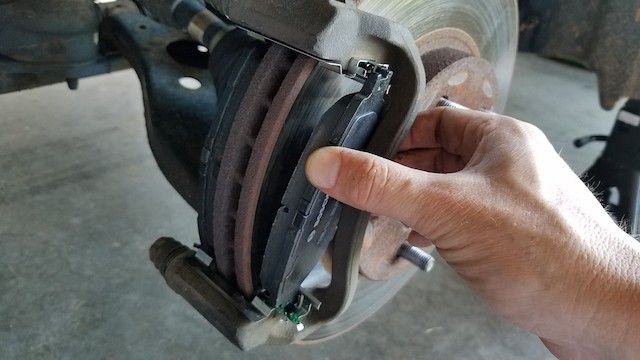
Nestled in each caliper on your vehicle are two brake pads. Brake pads help you stop your car on a dime. A brake pad is a simple part with several components:
- A metal backing plate
- Friction material (that looks like a grinding stone)
The entire part is about 6” long, 3” wide, and ¾” thick. The metal backing plate has the right dimensions to fit snugly into the caliper.
If you have disc brakes on both axles, your vehicle has 8 brake pads. Each set of brake pads works with the rotor to stop your vehicle as soon as you press down on the brake pedal. The brake pads provide the friction needed to stop the rotors from turning.
How Brake Pads Work
The disc brake system comes with some important components:
- Calipers
- Pads
- Rotors
Each wheel has one caliper, two brake pads, and one rotor. The brake caliper wraps around the top part of the rotor. It contains two brake pads, one on each side of the rotor. The friction material of each brake pad faces the rotor. It makes contact with the rotor when you press the brake pedal.
Pressing the brake pedal kicks the following events into motion (in a matter of moments):
- The brake pedal sends hydraulic pressure to the brake caliper.
- The hydraulic pressure forces the caliper pistons out.
- The pistons push the brake pads against the rotor.
- The contact between the rotor and pads creates enough heat and friction to stop the rotor from turning.
All the disc brake assemblies on your vehicle work at the same time once you press the brake pedal. So when the rotors stop turning, the vehicle comes to a halt.
The Most Common Types Of Brake Pads
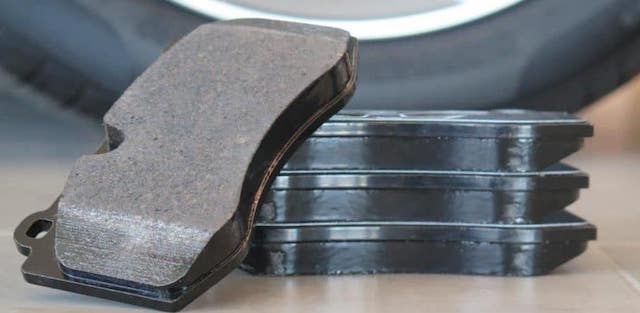
All brake pads have a similar design. Yet, the friction material varies. When shopping for brake pads, you can choose between different friction materials. You should base your decision on:
- Your driving style
- The rotors you're using
- Not all brake pads will work well with your rotors
The most common types of brake pads include:
- Organic/non-metallic brake pads
- Semi-metallic brake pads
- Low-metallic NAO brake pads
- Ceramic brake pads
- Sintered brake pads
Here's a comprehensive guide on brake pads. It describes each type of brake pad in more detail. Many OEM brake pads are semi-metallic. It's a great type of friction material. It's because semi-metallic brake pads last a long time and have great heat transfer capability.
How Long Do Brake Pads Last?
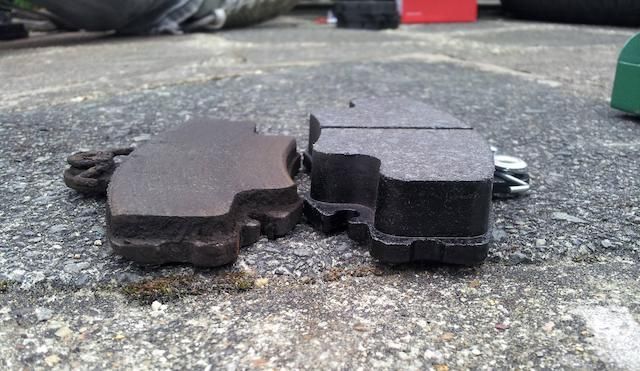
Every time you activate the brakes, the rotors and brake pads get worn down a bit. Under normal circumstances, brake pads last about 50K miles. They may wear out earlier, depending on:
- Your driving habits
- Do you have a habit of braking hard or riding your brakes? If so, your pads may wear out faster.
- The kind of traffic you drive in regularly
- If you drive in stop-and-go traffic often, your pads may wear out faster.
- The type of brake pads you use
- OEM brake pads usually last longer than aftermarket pads
If you want to know how much life your brake pads have left, check the thickness of the friction material. You want to replace your brake pads as soon as they wear out. Driving with worn brake pads will compromise your car's stopping ability, and may damage your rotors.
If you need replacement brake pads, look no further than our online shop. We carry genuine OEM brake pads for a variety of makes and models. Look up your vehicle in our catalog of brake parts!