

How To Diagnose A Failing Rotor
Brake rotors usually last up to 70,000 miles. But sometimes they can fail early due to:
- Stop and go driving
- Brake pad failure
- Corrosion
When your rotors are damaged beyond repair, you're going to need new ones. This article walks you through the process of checking your brake rotors. You want to see whether your brake rotors are worn out or if they still have some life left.
Signs Of A Failing Brake Rotor
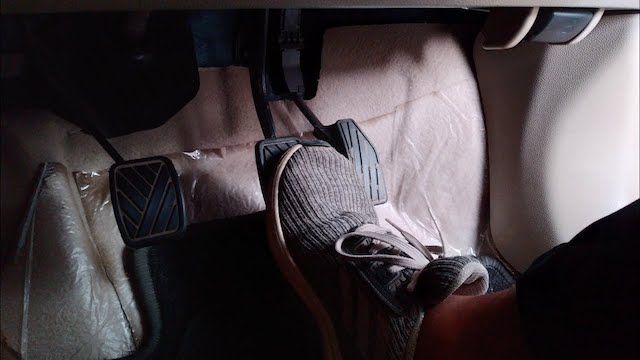
When your brake rotors fail, you'll notice some obvious signs, such as:
1. Longer Stopping Distances
A sign of a worn brake rotor is an increase in stopping distances.
If you have worn rotors, especially on the front axle, you'll notice longer stopping distances. A worn rotor is much thinner than a new rotor. As there is less metal in the worn rotor, it's can't absorb as much heat. It gets hotter when braking, and so do the brake pads. This causes brake fade, and longer stopping distances.
If the rotor is warped or cracked, the brake pads won't grip it as well, leading to longer stops.
2. Vibration Or Pulsation When Braking
Do you feel any kind of vibration or pulsation in your steering wheel or brake pedal while braking? If so, your rotors are most likely rough or uneven. This typically happens when your rotors are warped. This also happens when you have small cracks in your rotors that get worse over time. If the cracking gets bad enough, it will force vibrations into your steering wheel and brake pedal.
3. Thumping Sounds While Braking
A thumping noise when braking is usually the result of warped brake rotors. When your rotors are warped, your brake pads can jump back and forth in the caliper when you apply the brakes.
Be aware that it's not just bad rotors that can make this noise. You may also have a bad wheel bearing which causes the vibration and thumping sound while braking. Bad bearings can produce a very similar sound to worn out brake pads and rotors.
The Consequences Of Driving With Bad Rotors
When you have bad rotors, you want to replace them ASAP. Bad rotors cause problems, such as:
- Longer Stops: Worn rotors just won't stop the car as quickly. Drivers learn to adjust for normal braking situations. But in an emergency, worn brakes are dangerous, and can lead to rear ending another car.
- Uneven braking: A bad rotor on one side of a car lessens the braking power on that side, and the car will pull to the other side when braking. This is annoying in light braking, but it can be really unsafe in an emergency.
Checking The Rotors
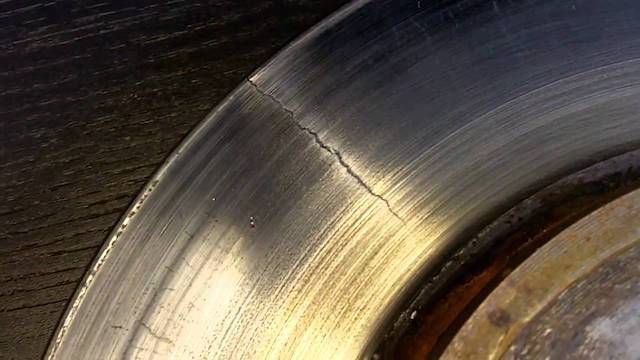
The best way to diagnose bad rotors is to give them a physical inspection. You'll want to check:
- Your rotor's thickness
- The rotor runout
- Any visible cracks or damage
- The surface texture
To inspect your rotors, start by loosening all wheel nuts first. Once you've done that, jack up the car under the front axle first. Then remove the wheel from that side.
The first thing you want to do is grab a flashlight and visually inspect the rotor for:
- Any visible cracks or damage
- Grooves or score marks
Next, run your hand across the rotor surface in the front and back. Feel the surface for any kind of roughness, warping, or uneven spots. You'll know whether your rotors are warped or not as soon as you run your hand over them and feel bumps and ridges. This usually indicates that the brake rotor has become warped.
If the rotor looks good at this point, you still want to measure its runout. Brake rotor runout is the deviation or lateral movement of the rotor as it rotates. It can't be more than 0.002". You can do this with a dial indicator tool.
When checking out the brake rotor runout, you'll want to use a dial indicator tool that reads 0.001 inches. Follow the instructions that came with the dial indicator tool to measure the rotor's runout.
Finally, grab a pair of calipers and check your rotor's thickness. The service manual will show the minimum thickness an OEM rotor can have before it is too worn to use.
Repeat the process with the rest of the rotors on your vehicle.
Don't Forget To Check The Brake Pads Too
If your rotors are bad, your brake pads may be bad, too. Be sure to check the brake pads for glazing, uneven pad wear, or any other signs of damage.
Need OEM Replacement Rotors?
We have you covered! At Suburban Auto Parts, we offer genuine OEM parts for a variety of makes and models. Visit our extensive catalog of OEM brake parts to see if we carry OEM rotors for your car. Our prices are unbeatable, too! If you need help finding the right OEM rotors for your car, feel free to contact us. We're always happy to help!