

How To Replace An Alternator
In most modern vehicles, your alternator can last upwards of 100,000 miles. The alternator is a vital part of the electrical system in your vehicle, and if it's not creating a proper charge for your vehicle, it can leave you stranded. Thankfully changing the alternator isn't too complex. It can be done at home with a few basic tools in a few hours time. If you'd like to learn more about the alternator and how it works within your vehicle, and some common signs of a failing alternator, check out this recent blog post.
Before Replacing The Alternator
In order to stay safe while working on the alternator, or any electrical aspect of your vehicle, always be sure to disconnect the battery before you begin. By disconnecting the battery, you ensure there's no electrical current flowing through the vehicle and, therefore, no way for that electricity to discharge.
Alternator Removal
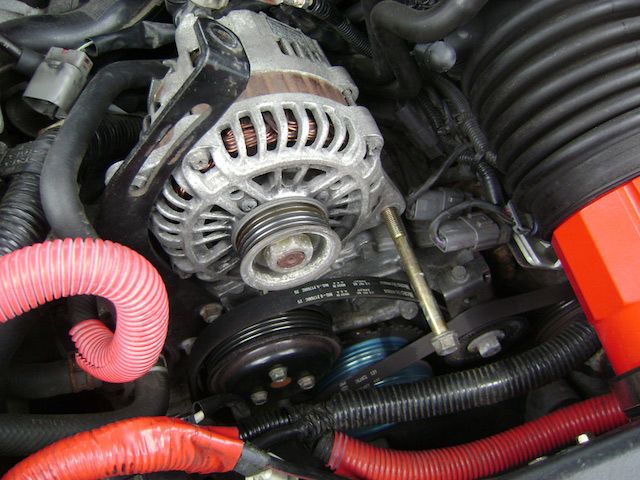
Now that the battery has been disconnected, you should identify the alternator. The alternator is spun by a belt and is a little larger than a can of soup. It has uniform holes cut all over. It also typically has two electrical connections coming from it, and typically sits higher up on the engine. If you need a replacement alternator or just a reference to what they look like, take a look here.
- If you've identified the alternator, inspect how the unit is mounted to your engine.
- Disconnect the plastic electrical connector before you remove the alternator.
- Remove the main power cord from the alternator by using an open-ended wrench to loosen the bolt. The main power cord can be identified as thick and connecting the alternator to the battery. Once the bolt is unfastened remove the cord from its connection.
- Now inspect the bolts holding the alternator in place and begin to loosen them. As you loosen these bolts, be sure you're prepared to catch or support the alternator as the bolts release. The alternator is heavy and could cause damage to your engine or vehicle if allowed to drop freely.
- Your alternator may need some slight wiggling in order to get it fully out of the engine bay, but it should come out relatively easy once the wiring and belt are removed. Double check that you have purchased the correct alternator. You can do so by comparing the two side by side and making sure all the connection sizes are the same.
When you do the job, be sure to install a new accessory belt. If the alternator failed, the belt is likely almost worn out too. You can relieve the tension on the belt by inserting the square side of a breaker bar into the hole of an auto-tension pulley and rotate clockwise.
Alternator Replacement
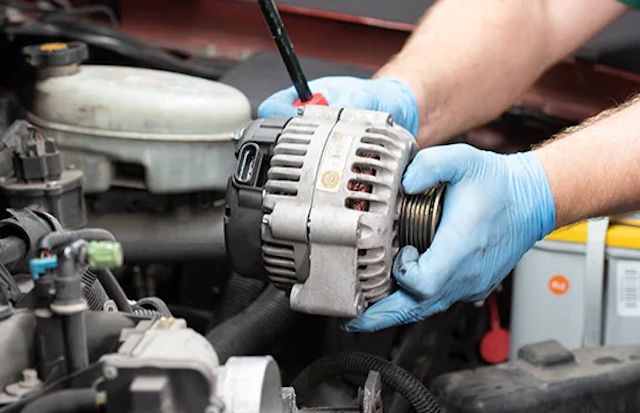
To install your new alternator, start by placing the new alternator where you removed the old one, making sure that you are not trapping any wiring or connections, then:
- Attach and tighten the mounting bolts by hand into the mounting bracket, tighten all the way if your vehicle is equipped with an auto tension pulley for your belt. If your car does not have an auto tension, do not tighten the bolts completely.
- Place the belt back over the alternator pulley system. If you do not know the exact route of the belt, there should be a diagram located in the engine bay. If there is not a diagram, check your owner’s manual.
- Tighten the belt with a pry bar by carefully pushing the alternator away from the engine if your car is not equipped with an auto tension pulley.
- Tighten all the remaining bolts with the appropriate socket and wrench until the bolts are completely installed.
- Reconnect the control harness into the new alternator. The plastic harness that holds are the wiring together will make a clear “click” sound when inserted correctly.
- Reconnect the positive and negative battery cables to the battery.
When it comes to replacement parts and guides, be sure to check us out at Suburban Auto Parts. With more than 70 years in business providing OEM parts, you can be confident that you will get what you need. We offer parts for many makes and models, and we have locations all over the United States to help you get your parts quickly. You can contact us here, or give us a call at 888-287-6125.