

What's A Serpentine Belt And Why Is It Important?
A serpentine belt is a long rubber belt that is connected to various engine components. It transfers power from the crankshaft to these devices. Read on to find out how it works, why it is important and when to replace it.
What Does A Serpentine Belt Do?
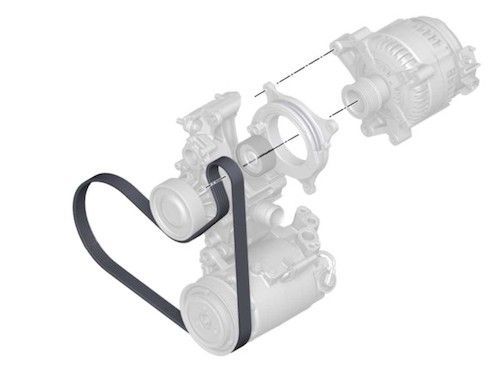
Serpentine belts are long-toothed rubber belts. They are connected to your engine via a series of pulleys and tensioners. The belt is powered by the crankshaft which in turn transmits the power to various engine components.
It runs whenever the engine is turned on. A serpentine belt needs to withstand extreme temperatures and many miles of use. Using high-quality OEM parts ensures that they fit right and work perfectly.
Which components does a serpentine belt power? The serpentine belt snakes through the front of the engine (hence its name) via a series of pulleys and tensioners and provides power to crucial engine components. Depending on the make and model of your car, it can power some or all of the following devices:
- Power steering pump
- Alternator
- Water pump
- Air conditioner
If the belt snaps or loses tension, these devices will stop working, or not work as well as they should.
How Long Should A Serpentine Belt Last?
Serpentine belts tend to last a long time. They aren’t always easy to access, so they are sometimes ignored until they snap or start causing problems. Signs that your serpentine belt is failing can include:
- The steering becomes extremely stiff.
- Your engine starts to overheat.
- The air conditioner is weak or stops altogether.
- Strange noises coming from under the hood.
- Warning lights illuminate on your dashboard (usually the check engine light or battery light).
If the belt snaps, all the above-mentioned components will stop working. You may still be able to drive a few miles but in the end the battery will fail, and the car will overheat. So, it’s best to stop immediately if you suspect that your belt has snapped.
When Should You Replace Your Serpentine Belt?
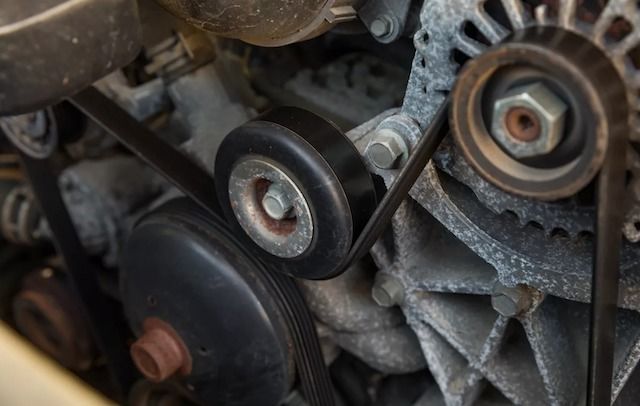
- Whenever you see cracking or fraying on the belt.
- If you hear squeaking or grinding from the pulleys and tensioners.
- Every five years or 100,000-miles (for OEM parts).
Older cars used to have two serpentine belts but most modern vehicles generally have only one. This helps lower complexity and maintenance costs. The downside is that if the belt snaps, all the ancillary devices it powers will stop working.
Most high-quality OEM serpentine belts can last up to 100,000-miles. Some cheaper aftermarket items can fail before reaching half that mileage. Belts also degrade with age. It is good practice to replace them every five years, regardless of mileage. A frayed or cracked serpentine belt should be replaced immediately. You should also change any pulleys and tensioners at the same time. Failing to do so could damage your new belt.
Replacing your serpentine belt with a non-OEM component is never a good idea. Aftermarket belts aren’t built to the same stringent quality standards and can fail prematurely and damage your vehicle. Suburban Auto Parts has been delivering top-quality OEM parts, including serpentine belts, for over 70 years. We have a huge inventory of parts for 19 different makes in warehouses across the country. Call us on 888-287-6125 or use our free parts finder service to get your OEM serpentine belt shipped today.