

How To Diagnose A Failing Serpentine Belt
Serpentine belts can last up to about 100,000 miles. Going past that mileage is high risk. As with any moving part, sometimes they can fail earlier than expected. Potentially leaving you stranded. Using a genuine OEM part can lower that chance, as does knowing how to diagnose a failing serpentine belt.
It may seem tricky but identifying the signs of a failing serpentine belt is easy. In this blog, we detail exactly what to listen to and look for.
What To Listen Out For From Inside The Car

The serpentine belt is tucked away under the hood; most of us don’t know it’s there until it starts to make a noise. Learn more about the job it does in this post. You can tell a lot about the condition of your serpentine belt just by listening to it. These are the sounds to listen for when driving your car:
- A squeaking sound when starting up the car - this could be a slipping belt or worn pulleys.
- A grinding or rough sound that doesn’t go away - the pulley bearings may be worn.
- A whirring or high-pitched noise that is louder at higher revs - this may indicate a damaged pulley and/or auxiliary syste damage.
All these noises will need further investigation, so let’s pop the hood and see what we need to look for.
What to Look Out For Under The Hood
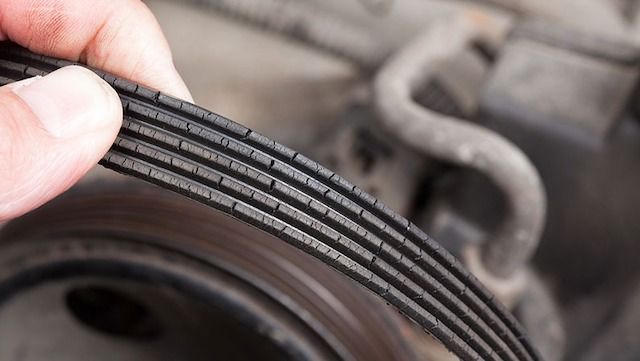
If you hear odd noises from under the hood, it’s time for a visual check. The serpentine belt is always located on the front of the engine. In many vehicles, the "front" of the engine faces the passenger wheel well. Either way, you’ll need to open the hood and take a look. These are the signs you should look for:
- Loose belt - this may meant that the tensioner needs adjusting or could be damaged/worn out.
- Cracked sections on the surface of the belt, usually caused by age or excessive temperature.
- Fraying or exposed metal fibers on the edges of the belt - often an indicator of misaligned or damaged pulleys.
- Damaged ribs or glazed portions inside the belt which are a sign of a worn pulley and tensioner. Or a damaged auxiliary device (i.e., air-conditioner, power steering pump, alternator, water pump).
- Oil or coolant on the belt. If you see this, the engine may need to be checked for leaks. The belt will also need replacing.
Replace Your Serpentine Belt With An OEM Part Before It’s Too Late
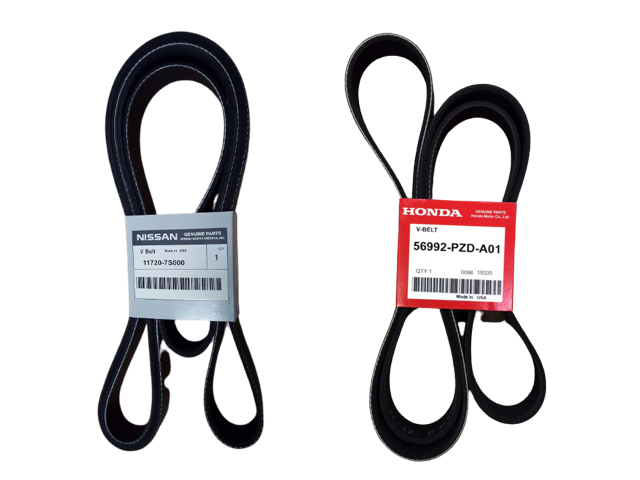
If you hear or see any of the symptoms listed above, it’s time for a new serpentine belt. Suburban Auto Parts has been delivering high-quality OEM parts since 1948. We only stock OEM components and have parts for 19 different vehicle makes.
Order your OEM serpentine belt from us today and get fast shipping thanks to our 54 locations across the US. Call us at 888-287-6125 or get in touch online. Finding the right OEM part for your vehicle has never been simpler.