

How To Diagnose Failing Shocks
Under normal circumstances, shocks last between 50K and 100K miles. Sometimes they can wear out early. For example, if you drive on bumpy roads often, your shocks won’t last that long.
Do you have a hunch that your shocks aren’t working that well anymore? You don’t need to bring your car to a shop and pay through the nose to have them check your shocks. Here’s a secret many shops don’t want you to know: it’s ridiculously easy to check your shocks! All you need to do is bounce your car and observe it.
The Most Common Signs Of Failing Shocks
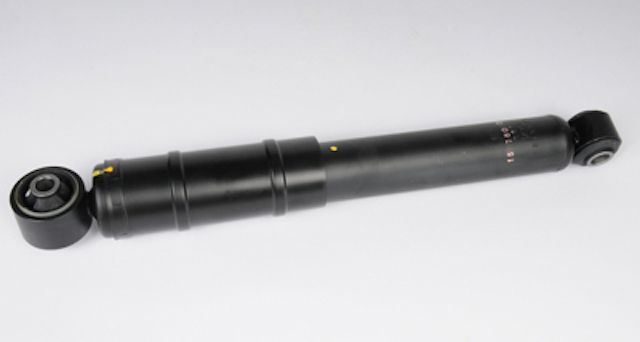
Before we show you how to do the bounce test, let’s cover the most common signs of failing shocks:
- Vibration in the steering wheel while driving
- Nose diving while braking
- Longer stopping distances
- Uneven tire wear
- Bouncier ride
If you notice any of these symptoms while driving, it’s worth taking the time to do the bounce test. You don’t need to grab any special tools or set aside a good chunk of time to do this. It takes only a few minutes, and you only need your hands!
Bounce And Observe
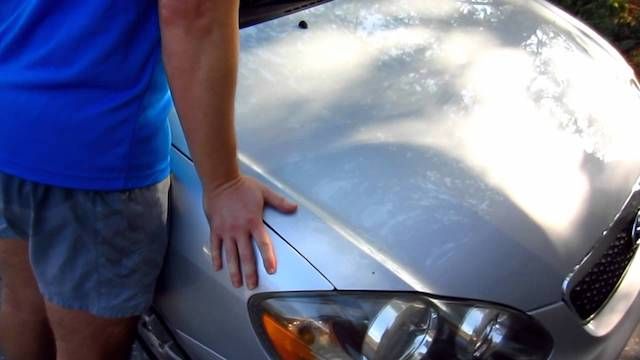
Image Credit: Paul79UF
When your shocks fail, they can no longer “smooth out” the bounciness caused by the springs. As a result, your vehicle becomes quite bouncy. That’s why the bounce test is a good way to tell if your shocks are still good or not.
The bounce test is a simple and straightforward process. All you need to do is bounce each corner of your vehicle that contains a shock and then observe its reaction. Here’s how you do it:
- Park your vehicle on a level surface.
- Go to one corner of your vehicle and then push it down with your hands, using your body weight.
- In one smooth motion, let go and then observe the way your vehicle bounces.
- If the shock at that corner is still good, your vehicle will bounce up and then settle to at-rest height.
- If the shock at that corner is worn, your vehicle will bounce more than twice.
- Repeat with the rest of the shocks on your vehicle.
Inspecting Your Shocks
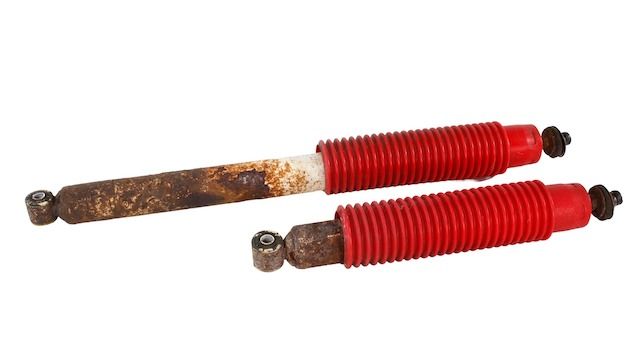
Did the bounce test yield uncertain results? Or do you want to be 100% sure that your shocks are in fact worn? Grab a flashlight and then give your shocks a thorough visual inspection. Look for any signs of wear or damage, such as:
- Rust
- Leaking fluid running down the shock
- Cracked bushings
- Cracked housing
- Worn seals
- Any other signs of damage
If you need new shocks, you can score OEM shocks from us at wholesale pricing! Look up your make and model in our catalog of shocks and struts. Do you need help finding the right replacement shocks for your vehicle? We'll be happy to help if you contact us here.